Coupler Rebar
Seismic-resistant mechanical rebar splicing systems
TS 500 · Turkish Seismic Code
Coupler Rebar
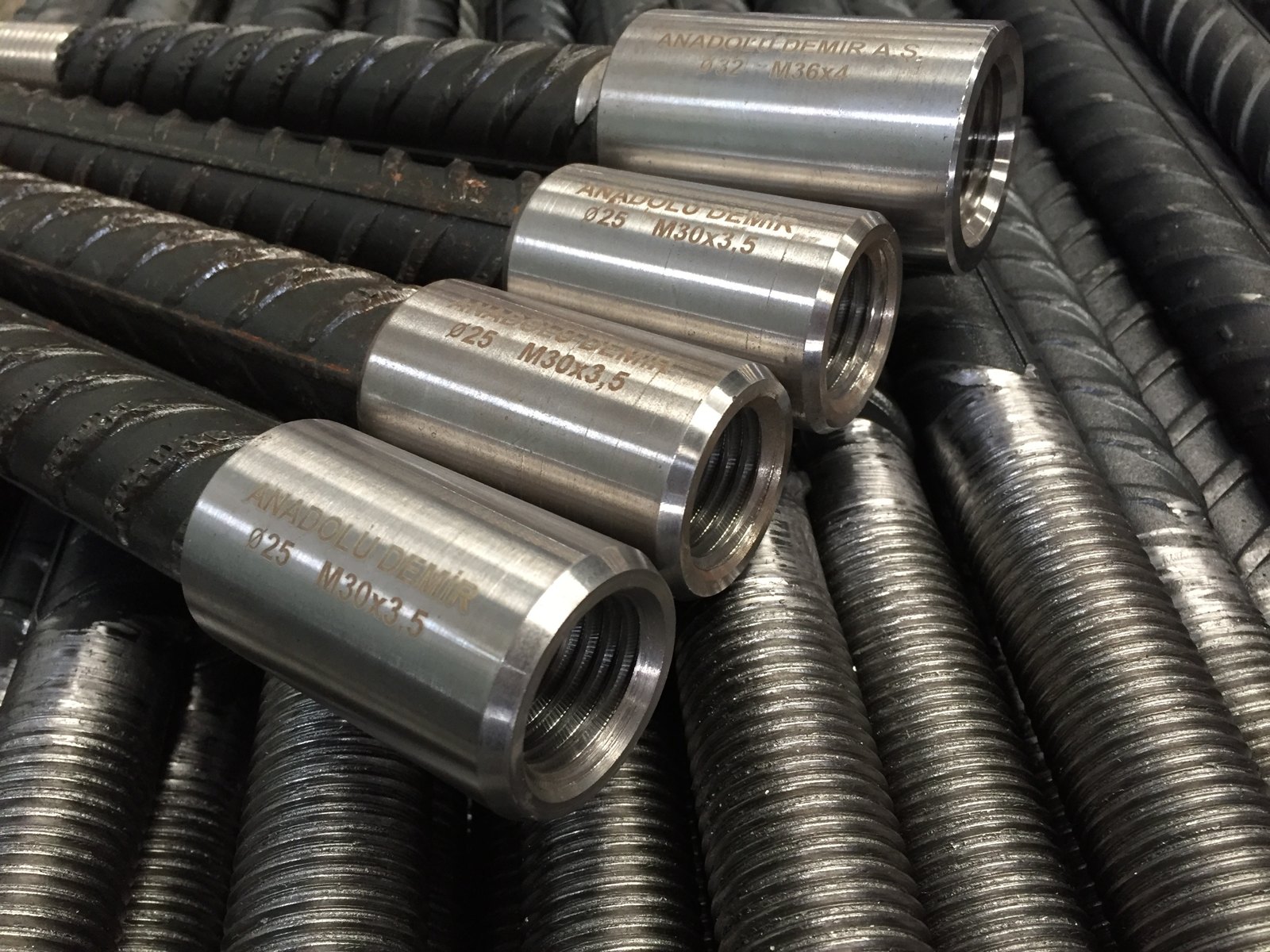
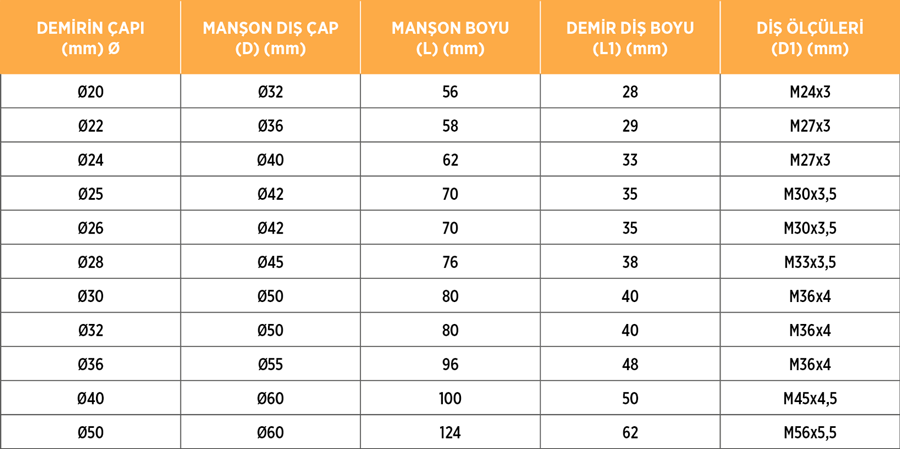
Today, mechanical connectors — couplers — are used in buildings for lap splicing, forming rebar hooks, ensuring reinforcement continuity, at bar diameters mandated by specifications, in special structural sections, where rebar congestion must be avoided, and in many places indicated by the project engineer.
In almost all reinforced concrete structures, rebars must be spliced or processed in various ways to achieve the required bond. Load transfer and continuity in reinforcement is achieved by lap splices, welded splices or coupler splices. According to Turkish standards TS 500 and the Turkish Seismic Code, coupler splices are mandatory for diameters of 30 mm and above in Türkiye.
The use of mechanical couplers in rebar splicing is becoming more widespread in Türkiye every day. Bringing waste rates under control, accelerating the construction schedule and seismic quality turn coupler use from a mere technical necessity into a preference that gives contractors a privileged position in the long run.
Benefits of Coupler Rebar
- Provides enhanced structural integrity.
- The mechanical coupler transfers the load in the rebar on the same axis, independent of concrete and ambient conditions.
- In tension zones, the splice must provide 125% of the minimum characteristic yield strength of the rebar (ACI 318-05, TS 500, Turkish Seismic Code).
- Coupler use in columns eliminates development-length calculations and possible calculation errors.
- Removes the need for special products such as epoxy used in lap splices.
- Reduces scrap and waste costs.
- Reduces rebar congestion; concrete placement becomes easier, labour cost drops.
- Saves labour and time compared to other splicing methods.
- Lowers transport, storage and crane costs.
Headed Rebar
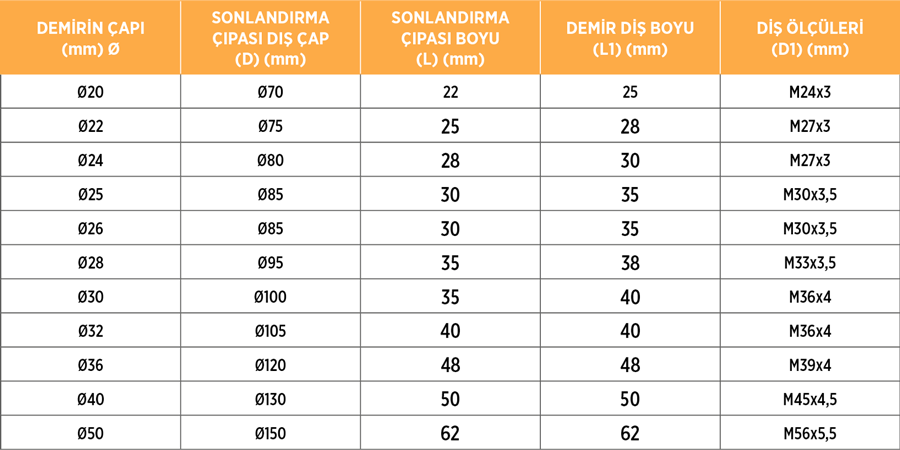
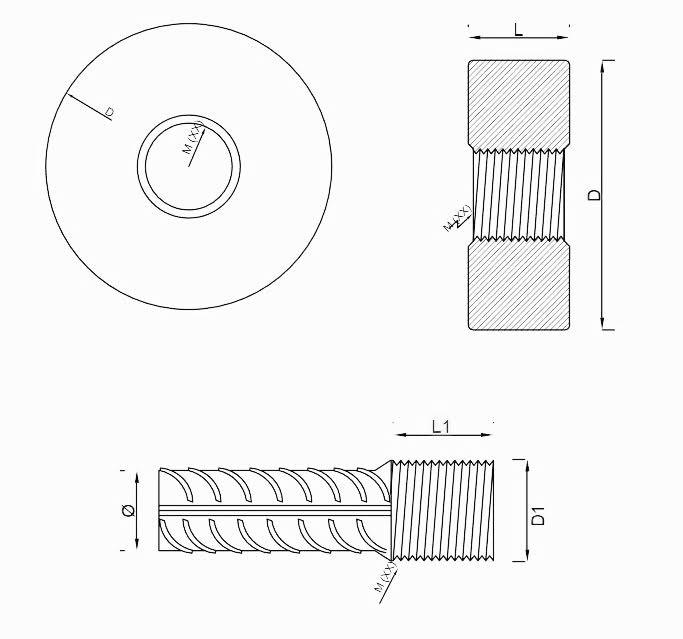
In structural designs, the "Headed (Anchor-Nut) Rebar" application offers simpler and more effective anchoring flexibility as an alternative to traditional reinforcement elements such as L-bars inside concrete.
This saves on L-bars and minimises rebar congestion, increasing the clearances needed for concrete pouring and vibration.
When headed rebar is used, the load interaction and transfer between concrete and rebar is established evenly and completely.